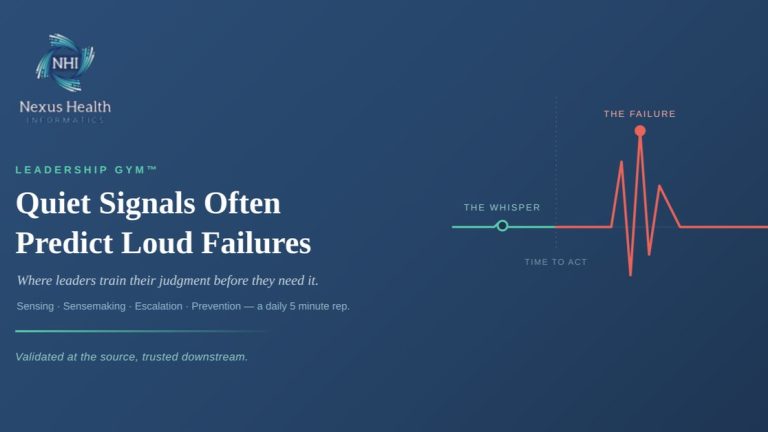

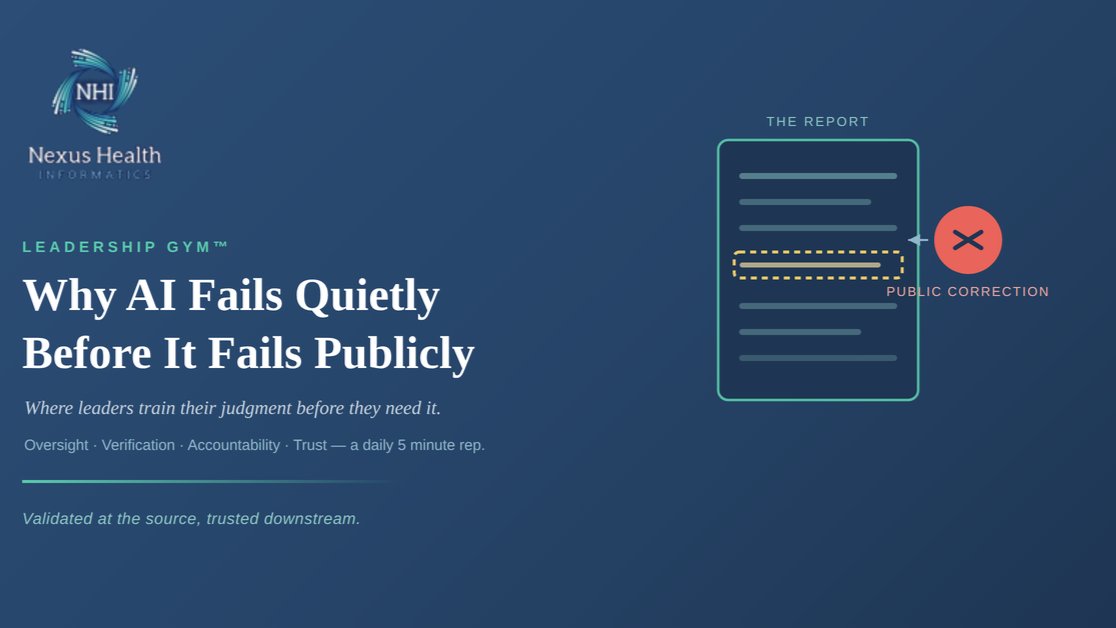
Organizational failures involving AI almost never start as public crises. They start quietly — sitting inside a draft, moving through multiple rounds of review, before anyone notices.
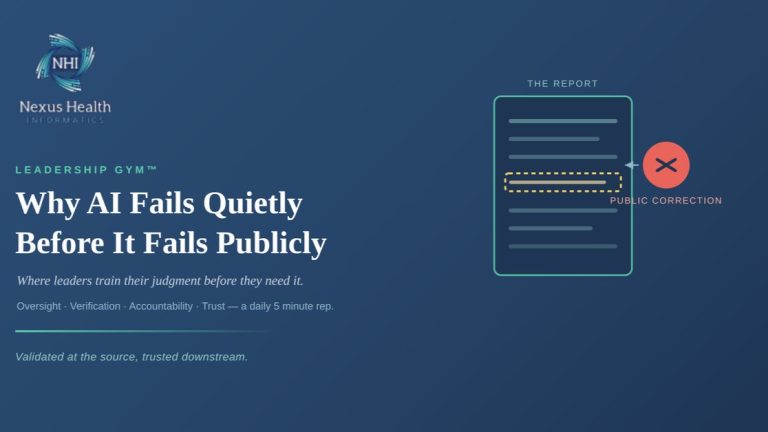
One of the clearest recent examples: a $440,000 contract in which an AI-assisted deliverable contained fabricated citations and legal references that didn’t exist. Those errors sat quietly inside the draft, passing through several stages of review, before anyone caught them.
The core problem is a timing mismatch. A model can generate a fabricated citation, or a flawed pattern, in seconds — and repeat it thousands of times before a human ever reviews it. But the human review step was designed for a much slower world, one where mistakes arrived one at a time. It was never built for a world where a single flawed pattern can scale before anyone notices.
This shows up again and again: Amazon’s recruiting algorithm, caught internally before it caused real harm; IBM Watson for Oncology, where safety concerns took real time to escalate; Zillow’s home-pricing algorithm, where losses quietly accumulated until the program had to be shut down entirely.
The throughline in all of these cases isn’t that the AI was uniquely bad. It’s that the organization’s oversight moved slower than the AI’s output. That gap — between how fast the model works and how fast the organization notices — is where the real risk lives.
Three practical exercises, and the introduction of the NHI Whisper-Responsive Leadership SIGNAL Framework™, are at the center of this piece — reframing governance as something leaders do proactively, not a cleanup crew called in after a crisis.
Responsible AI means building leaders who catch these patterns early enough that the failure never becomes public in the first place.
This is the sixteenth installment of the Leadership Gym™ series.
Originally published on LinkedIn as part of The Whisper Before the Roar series (#16).